What records and context are needed?
We agree the population, period and minimum fields for the question before intake. A retention review generally begins with employment and departure dates, departure classifications and role or team history. Pay, movement and absence records are additional sources where relevant and permitted.
Operations helps explain role criticality and delivery dependencies. Understanding workload, trust or culture requires appropriate employee feedback and context; a workforce export alone cannot establish them.
Who needs to participate, and how much work is involved?
Name an executive sponsor and a contact who can prepare the agreed export and resolve mapping questions. HR provides people context; Finance checks costs; Operations explains delivery consequences. We confirm preparation tasks, participants and estimated client effort in the proposal.
When will we receive the first readout?
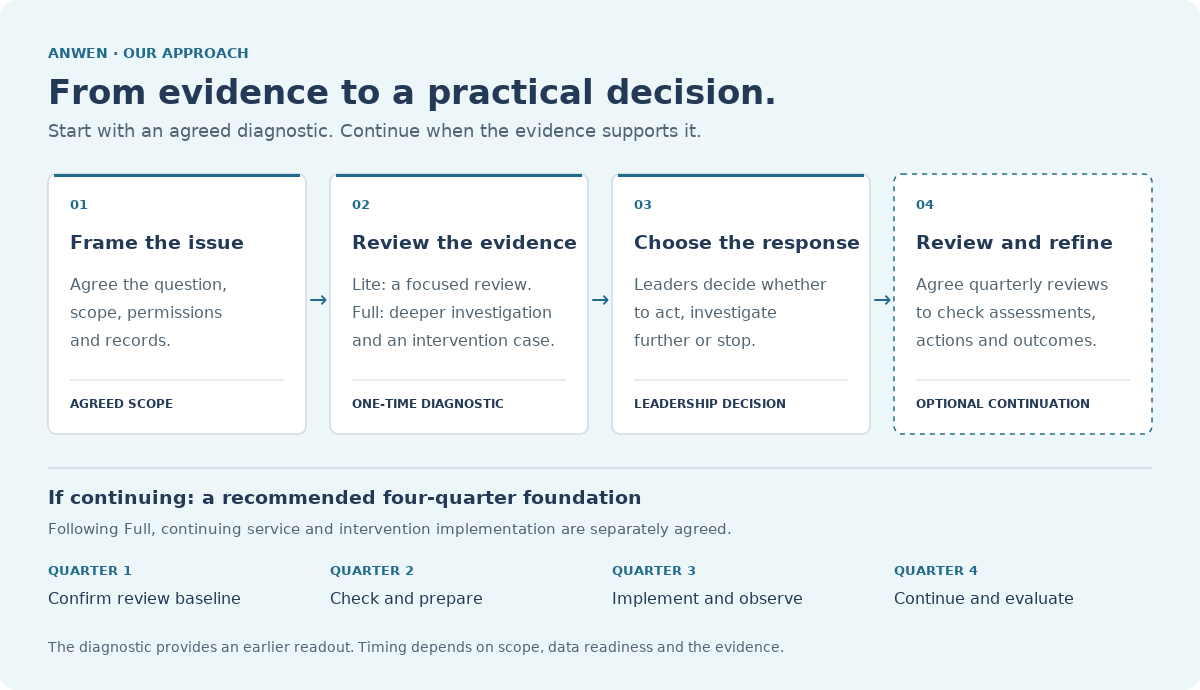
We agree the diagnostic’s delivery schedule before you commit, based on the data preparation needed and an available delivery slot. The diagnostic provides an earlier readout than the four-quarter continuing review. We confirm the required records, milestones and client responsibilities as part of the scope.
Can the report be shared with our leadership team?
Lite includes browser-only report access; downloads are excluded. Agree authorized readers and any requirement for a shareable executive summary in the proposal. Additional access or deliverables must be confirmed within the scope.
Does this include implementing interventions?
The diagnostic supports the decision and plan. Implementation, additional analysis and continuing service are separate decisions. Leaders can act on supported findings, investigate further or stop; an inconclusive result is a legitimate finding.