Illustrative Full diagnostic · Synthetic data

From workforce evidence
to a decision leaders can use.

See how an executive readout connects a workforce finding to a candidate intervention, its business case and a plan for review.

Illustrative report format using invented aggregate data. This is a sample layout, not a client result or output from an Anwen analytical run. Client deliverables reflect the agreed scope and available evidence.

Inside the executive readout

A clear view of the finding.
A practical basis for the next decision.

An illustrative summary of the sample below: the workforce pattern, the questions it raises, the choices to evaluate and the responsibilities for review.

Illustrative report · Synthetic data

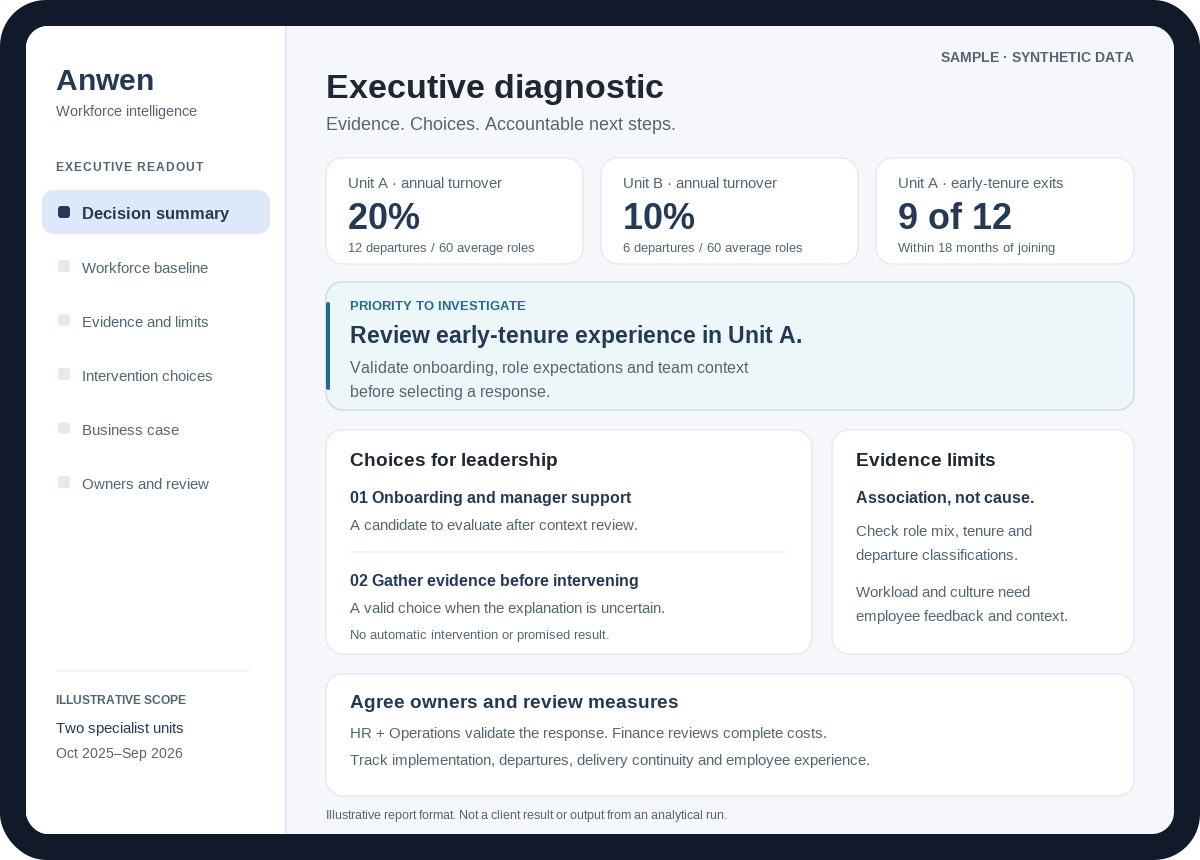
Investigate early-tenure experience in Unit A.

Unit A
12 departures ÷ 60 average headcount
20% annual voluntary turnover
Unit B
6 departures ÷ 60 average headcount
10% annual voluntary turnover
Early-tenure departures
Unit A: 9 of 12 · Unit B: 3 of 6
Within the first 18 months of employment.

The next decision

Evaluate focused onboarding and manager support, investigate an alternative or gather better evidence before acting.

What needs checking

Role mix, tenure composition, departure classifications and employee experience. These observations do not establish the cause of departure.

Who owns the review

HR and Operations validate context. Finance checks complete costs. The sponsor agrees the action and outcome-review measures.

Invented observations for Oct 2025–Sep 2026. This is an illustrative layout, not a client result or output from an Anwen analytical run.


Illustrative report preview using synthetic data

Illustrative Anwen executive diagnostic: Unit A has 20% annual voluntary turnover versus 10% in Unit B, with nine of Unit A’s twelve departures within eighteen months of joining. The readout prioritizes investigation of early-tenure experience, identifies evidence limits and assigns responsibilities for the next decision.
Executive diagnostic. Illustrative report format, not a client result or output from an Anwen analytical run. The sample observations and their limits are explained below.
Open the full report illustration

Executive readout

Where should we focus the next workforce investment?

A fictional organization wants to understand specialist turnover before committing to a broad retention program.

Decision focusSpecialist retention
FocusTwo specialist units
Average specialist base pay$95,000
Period reviewedOct 2025–Sep 2026
Priority to investigate

Start with early-tenure experience in Unit A.

Unit A has more recorded voluntary departures than Unit B, and most of its departures occurred within the first 18 months of employment. Validate the onboarding, role expectations and team context before selecting a response.

The decision: whether to test focused onboarding and manager support, gather more evidence, or consider another intervention.

01 · What the records show

A visible pattern, with a clear denominator.

Compare recorded departures and workforce size before interpreting why the difference exists.

Synthetic observations for a single 12-month period.
Specialist unitAverage monthly headcountVoluntary departuresAnnual turnover rateDepartures within first 18 months
Unit A601220%9 of 12
Unit B60610%3 of 6

Method: voluntary departures during the period ÷ average monthly headcount. Early-tenure figures describe the people who left, not the probability that an early-tenure employee will leave.

What this supports

Prioritize a closer review of Unit A and examine early-tenure experience. The difference is an investigation priority, not a conclusion about a manager or an individual.

What still needs an answer

Compare role mix and tenure composition, validate departure classifications and hear from employees about onboarding and workload. The export alone does not establish the cause of departure or measure trust and culture.

02 · The choices to evaluate

Connect a proposed action to its evidence and cost.

A useful diagnostic makes the options explicit, including when to gather better evidence before spending.

First candidate to evaluate

Focused onboarding and manager support

Why consider it: early-tenure departures are prominent among Unit A’s recorded exits.

What to examine: role expectations, onboarding handovers, access to support and early manager check-ins.

Cost considerations: manager time, training effort, any additional support and time taken from other work.

An alternative

A targeted pay or progression response

Why consider it: if additional evidence identifies pay position or progression barriers as relevant concerns.

What to examine: compensation context, internal movement and employee feedback before selecting the population or action.

Cost considerations: recurring payroll, development investment and implications for comparable roles.

A legitimate decision

Gather evidence before intervening

Why consider it: the observed difference may reflect role mix, tenure composition or incomplete records.

What to examine: a focused review of employee experience and the missing context.

Cost considerations: review effort, decision delay and the consequences of acting on an incorrect explanation.

03 · The business case

Consider what the business could protect.

Replacement spending, time to restore performance, continuity of delivery and the experience of the team that stays.

Use the role’s salary and an explicit assumption to begin a replacement-cost discussion. Then validate the actual hiring, coverage and lost-output costs with Finance.

Explore the $95,000 replacement-cost example

Compare the complete costs

Include the diagnostic, any continuing service, the selected intervention and internal effort. Historical turnover cost is not automatically the benefit Anwen or an intervention can deliver.

Include the culture question

Agree how workload, fairness, management support and willingness to stay will be examined through employee feedback. Keep those findings alongside the financial case.

The diagnostic establishes an informed basis for a decision. Any avoided cost or improved outcome remains to be demonstrated after action.

04 · Ownership and follow-through

Agree the review before the action begins.

The executive readout ends with a decision owner, the next action and a way to evaluate what follows.

ResponsibilityWhat to recordReview point
HR and OperationsValidate the early-tenure context and confirm whether the focused response is appropriate.Before approval
FinanceAgree cash and capacity costs, the alternative to the proposal and the economic assumptions.Before investment
Action ownerRecord what was implemented, participation and employee feedback about support and workload.30, 60 and 90 days
Executive sponsorReview departures, delivery continuity and employee experience against the baseline and a credible comparison where feasible.Agree a suitable observation period before acting

Early implementation signals are distinct from retention outcomes. Reviews may conclude progress, no meaningful change or insufficient evidence; a lower turnover rate alone does not prove the intervention caused the change.

What decision should your diagnostic inform?

Start with the business issue and the action you are considering. No employee records are needed for the first conversation.

Discuss a diagnostic